
Sports & Recreation Facility Roofing roof access, staging space, and tenant or operations limits.
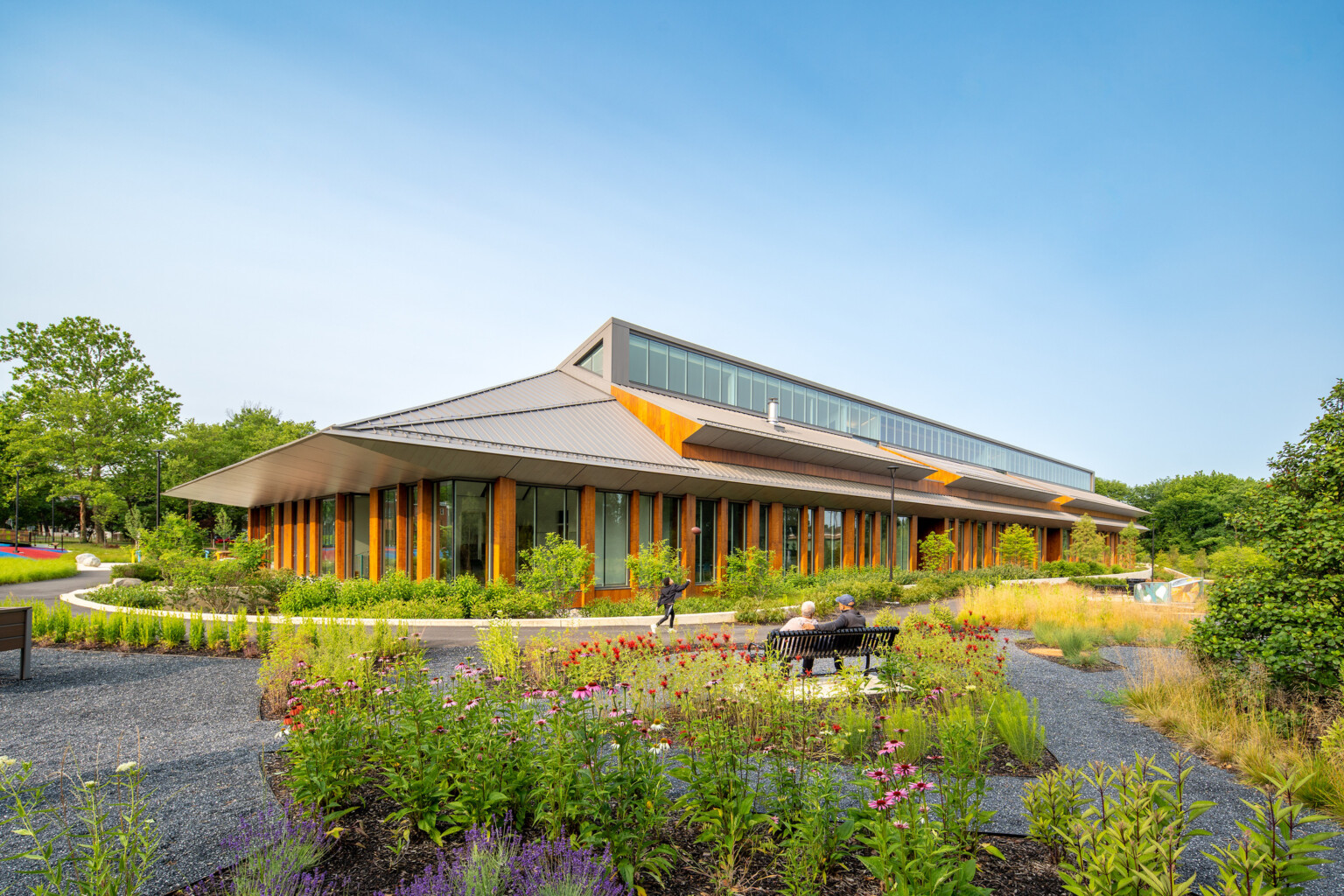
Sports & Recreation Facility Roofing in Corpus Christi, TX
Corpus Christi takes its recreation seriously, from the city's network of community gyms and aquatic centers to the indoor courts, club facilities, and the athletic venues clustered near the Sea District around Whataburger Field. These buildings put a roof to a test most commercial structures never face: enormous open spans, crowds that drive heavy ventilation, and in many of them, a pool throwing corrosive humidity at everything overhead.
The Span Is the First Challenge
A gym floor, an indoor court, or an arena bowl has to be clear underneath, which means the roof crosses long distances with no interior columns to lean on. Wide clear-span decks flex under load and they grab wind uplift, the same structural reality we manage on large theater and arena roofs. The fastening pattern and membrane attachment can't be lifted from a generic spec — steel deck spanning eighty feet calls for completely different fastener pull-out math than the same deck at thirty feet. We evaluate the actual deck type and span and engineer the attachment to it as part of every long-span recreation roof we scope, rather than assuming a one-size detail will hold.
Indoor Humidity Has to Be Designed For
Pack a building with people exercising and add showers, locker rooms, and a pool, and you create a moisture load that pushes up into the roof all day. In Corpus Christi's humid Gulf climate, that interior vapor drive condenses inside the insulation if the vapor retarder is in the wrong position for this climate zone. What is correct for a dry inland gym is wrong here, and getting it backwards rots the deck and kills the insulation's R-value from the inside while the membrane on top still looks fine. We set the vapor control layer based on the facility's real operating conditions and local climate data, and we run a moisture survey on what is already up there before recommending a recover, because covering a wet assembly only locks the problem in.
Natatoriums Are the Hardest Roof We Do
Any facility with an indoor pool is in a category of its own. Chlorine reacting with what swimmers bring into the water produces chloramine gas, and chloramine is brutally corrosive — it eats ordinary steel flashing, aluminum edge metal, and even some membrane adhesives from below. A natatorium roof in Corpus Christi has to be built with materials confirmed to stand up to that exposure: stainless steel or copper flashing where chloramine reaches, membranes checked against the manufacturer's chemical-resistance data, and adhesives specifically tested for pool-hall air. The ventilation has to exhaust that air to the outside rather than recirculate it up against the underside of the roof. Putting a standard roof over a pool hall is a guaranteed early failure, and we have seen the results when someone tried.
Matched to the Programming Calendar
Recreation buildings are busiest exactly when most contractors want to go home — evenings, weekends, holidays, and school breaks. There is rarely a clean empty window. So we work from the facility's programming calendar: gym and arena roof work concentrated in weekday daytime hours, each zone dried in and confirmed watertight before evening leagues and classes start, and on pool facilities, any exhaust or HVAC penetration work coordinated with the pool operations team so air exchange over the water is never compromised. The scheduling plan comes with the scope.
Many of these facilities are public — city recreation centers, county park-district buildings, YMCAs, and school gymnasiums — and public ownership brings its own track: competitive bid advertising, bid bonds, performance and payment bonds, and prevailing-wage compliance where it applies. We carry the bonds and insurance for public work in Texas and know the documentation those contracts demand. Private clubs and sports-entertainment venues run a different procurement path but bring their own tight constraints from membership schedules and event calendars. We have worked both across the Coastal Bend and the broader Texas market.
A long-span recreation roof is a large sail, and Corpus Christi's hurricane season from June through November makes wind uplift a primary design load, not a detail. Combined with the salt air that corrodes edge metal and rooftop units, that means securement and attachment have to be specified for genuine coastal exposure, with the storm readiness documented. A big-span gym fastened to an inland standard is precisely the roof that fails in a Coastal Bend windstorm.
Sports & Recreation Facility Roofing Questions
By positioning the vapor retarder correctly for Corpus Christi's coastal climate zone and confirming the existing assembly isn't already wet. We run a moisture survey before finalizing scope on any aquatic or high-humidity facility, because recovering over a saturated or misspecified deck compounds the moisture problem instead of solving it.
Chloramine gas corrodes standard metal flashing, aluminum edge metal, and some adhesives, so we use stainless steel or copper flashing where chloramine reaches, confirm the membrane against the manufacturer's chemical-resistance data, and select adhesives tested for pool-hall environments. Ventilation is set to exhaust that air outside rather than recirculate it under the roof. Standard roofing specs do not belong on a pool hall.
We work from the facility's programming calendar. Gym and arena roof work is concentrated in weekday daytime hours with each zone confirmed watertight before evening leagues and classes begin, and on pool facilities we coordinate any exhaust or HVAC penetration work with operations so air exchange over the water is never interrupted.
Yes. For city recreation centers, park-district facilities, and school gymnasiums we work through competitive bid advertising, bid bonds, performance and payment bonds, and prevailing-wage compliance where it applies. We carry the required bonds and insurance for public work in Texas and know the documentation these contracts require.
Typically a 60-mil or 80-mil membrane mechanically attached over polyiso, with the attachment engineered to the actual deck type and span — eighty-foot steel deck needs different fastener pull-out calculations than the same deck at thirty feet, and securement is specified for coastal wind. We provide the deck evaluation and fastener specification as part of the scope.
What We Document
Membrane, seams, laps, edges, drains, scuppers, curbs, penetrations, rooftop units, and previous repairs.
Salt-air corrosion, wind exposure, ponding, blocked drainage, wet insulation clues, and interior leak evidence.
The practical split between immediate repair, maintenance, restoration review, recover planning, and replacement budgeting.
Daily dry-in expectations and closeout photos for ownership review.