
Pharmaceutical & Laboratory Roofing roof access, staging space, and tenant or operations limits.
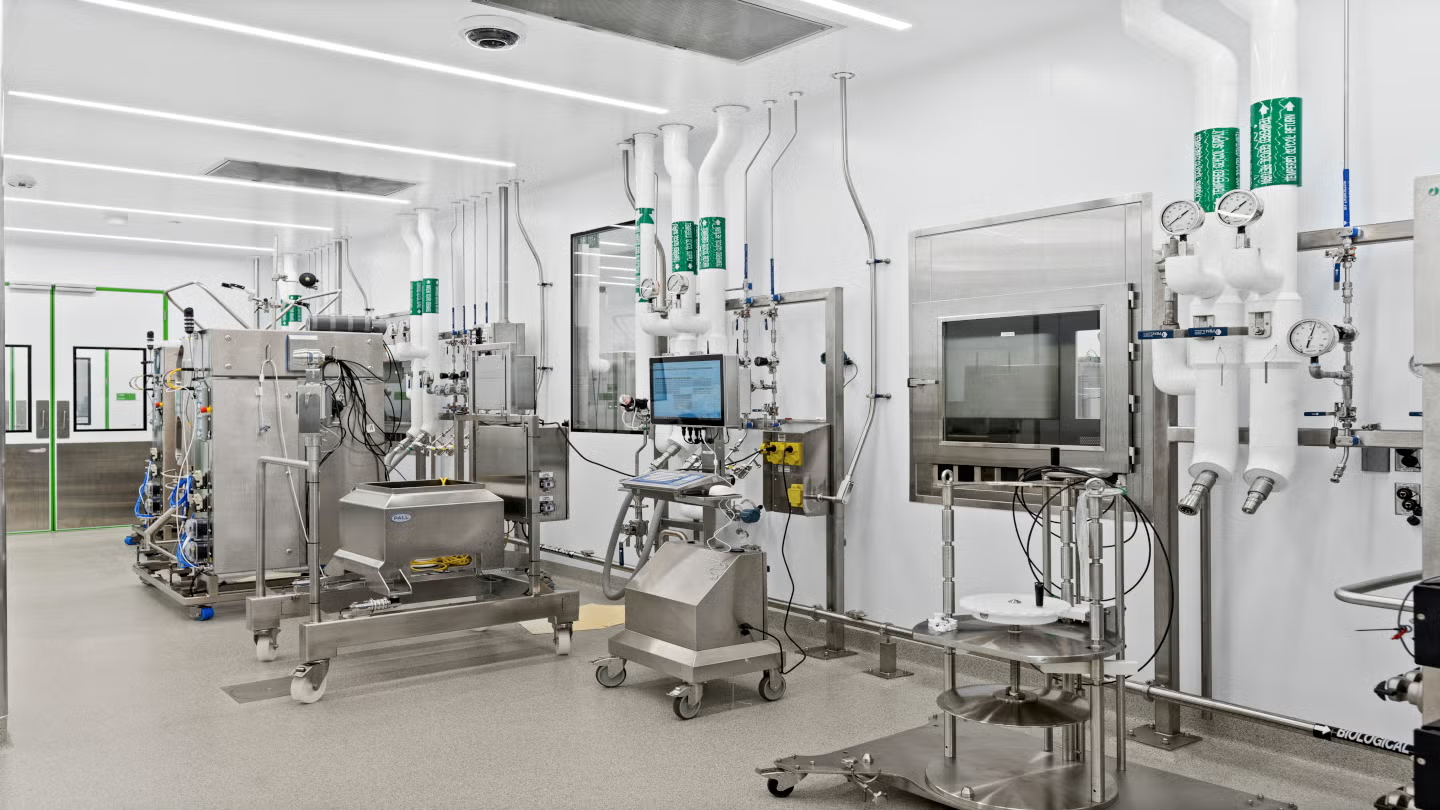
Pharmaceutical & Laboratory Roofing in Corpus Christi, TX
A leak over a cleanroom or a calibrated instrument is not a maintenance ticket. We roof Corpus Christi labs and pharma space with that stakes level in mind.
The roof is part of a controlled environment
On most buildings a roof leak ruins a ceiling tile. On a pharmaceutical or laboratory building it can compromise a batch, knock a cleanroom out of its certified pressure range, or destroy an instrument that took weeks to calibrate. The roof above a lab is not a separate system from the science happening underneath it. The membrane, the insulation, and especially the dozens of HVAC and exhaust penetrations are all part of the controlled environment, and we treat them that way. A single failed pitch pocket over a balance room or a wet patch of insulation feeding a cleanroom plenum can trigger an investigation, a hold, and a remediation bill that dwarfs the cost of doing the roof right. Our entire approach to these buildings is grounded in eliminating that risk before it exists rather than chasing it after a stain appears.
Cleanroom HVAC and exhaust are the whole job
The thing that separates lab roofing from ordinary commercial work is what is sitting on the deck. A cleanroom suite runs dedicated air handlers that hold the rooms at a precise positive or negative pressure relative to the corridor, and the supply and exhaust ducting for that system penetrates the roof in dense clusters of curbs. Any roofing work near those penetrations can disturb the pressure relationship between rooms, even briefly, so we coordinate that work with the facility's mechanical team and confirm the rooms recover their pressure differential after we close up. Lab exhaust adds a second layer: fume-hood and process stacks vent solvents, acids, and other corrosive vapors that drift back down and condense on whatever membrane sits next to the stack. Those vapors will chemically attack a standard membrane in spots that no warranty covers. We identify what each stack is actually venting before we pick a membrane for the zone around it.
Where lab and pharma space sits across the Coastal Bend
Membrane and detailing for zero-tolerance roofs
For buildings with corrosive exhaust, we favor a heavier reinforced PVC membrane, which holds up to solvent and acid vapor far better than the standard alternatives, and we step up the specification in the zones immediately around the worst stacks. Standard TPO does not belong next to a solvent exhaust outlet. Every penetration gets detailed as its own item with the right curb height, flashing, and termination, because clusters of poorly detailed penetrations are exactly where these roofs fail. Where the structure and the science allow it, fully adhered assemblies keep the fastener count down and reduce the chance of a deck penetration over a sensitive space. We also plan the work to keep dust and debris out of any air path that feeds a controlled room, which often means physical separation and a clean-as-we-go sequence rather than an open tear-off.
Access, scheduling, and documentation that survives an audit
Regulated facilities do not let an unbadged crew climb onto the roof. We start the access and credentialing conversation during preconstruction so the people doing the work are cleared before the start date, and we build the schedule around the facility's maintenance windows and any controlled-space shutdowns rather than forcing the building to work around us. Just as important is what we hand over at the end. Pharmaceutical and lab clients live inside quality-management systems, so we provide a closeout package built for that world: material submittals, daily work records, penetration mapping, manufacturer installation documentation, and warranty registration, formatted so a facility engineer can drop it straight into their files and produce it when an auditor asks.
Pharmaceutical & Laboratory Roofing Questions
How do you keep roofing work from disturbing our cleanroom pressure?
Cleanroom suites depend on a precise pressure difference between rooms, and that balance runs through the rooftop HVAC penetrations. We schedule penetration work near those curbs with your mechanical team, often during a planned HVAC window, and we confirm the rooms recover their pressure differential before we consider the area closed. We also control dust so nothing enters the air path above a controlled space.
What membrane do you use near corrosive lab exhaust?
We favor a heavier reinforced PVC membrane around fume-hood and process exhaust because it resists solvent and acid vapor far better than standard TPO. Before we spec the zone around a stack, we find out what that stack is actually venting and match the membrane to it. Standard membranes get chemically attacked in those spots and the damage is usually excluded from the warranty.
Can you work on our occupied lab without shutting it down?
Usually, yes. We sequence the work around your operating and maintenance schedule, keep each section watertight as we go, and isolate the work area so dust and debris stay out of sensitive spaces. Any task that touches a controlled-space penetration is coordinated with your facility team in advance.
Do your crews handle facility access and badging?
Yes. We start credentialing and background-check coordination during preconstruction, typically a few weeks ahead, so the crew is cleared before mobilization. Escort and access rules go into the preconstruction plan so there are no surprises on day one.
What documentation do you provide at closeout?
A package built for a quality-management system: material submittals, daily work records, a penetration map, manufacturer installation documentation, and warranty registration. It is organized so your facility engineer can file it and produce it during an audit or inspection.
What We Document
Membrane, seams, laps, edges, drains, scuppers, curbs, penetrations, rooftop units, and previous repairs.
Salt-air corrosion, wind exposure, ponding, blocked drainage, wet insulation clues, and interior leak evidence.
The practical split between immediate repair, maintenance, restoration review, recover planning, and replacement budgeting.