
Movie Theater & Cinema Roofing roof access, staging space, and tenant or operations limits.
Movie Theater & Cinema Roofing in Corpus Christi, TX
Wide column-free decks over the auditoriums, a rooftop unit for every screen, and a roof that has to stay quiet. Corpus Christi cinema roofing handled for all of it.
The auditorium span is the defining problem
Keeping the room quiet and dark
A theater roof has a job that most commercial roofs do not: it has to help keep the room quiet. Audiences are paying for immersive sound, and a thin or poorly insulated roof assembly lets a hard South Texas rain or the wind off the bay bleed into the auditorium, and lets sound from a loud screen bleed into the one next door. The roof insulation and deck assembly are part of the acoustic separation between houses and between the building and the weather. When we recover or replace a cinema roof we treat the insulation as more than a thermal layer, keeping the assembly continuous and avoiding details that create a thin spot or a sound path. The same assembly also has to hold up the blackout darkness the room depends on, so any skylight or smoke-hatch penetration gets detailed to seal light as well as water.
A rooftop unit for every screen, plus the concession load
Cinema roofs carry a mechanical load that surprises people. Each auditorium runs its own dedicated HVAC, often a rooftop unit per screen, because the cooling demand swings from empty to a packed house in minutes and each room has to be controlled on its own. On top of that there is kitchen and concession exhaust, walk-in cooler and freezer condensers for the food and bar service that modern theaters depend on, and lobby and restroom ventilation. The penetration count on a Corpus Christi multiplex rivals what we see on far more technical buildings. Every curb, duct, and conduit run is its own flashing detail, and we map and re-flash all of them before new membrane goes over the top. Those rooftop units also bring service crews up regularly, so we protect the membrane with proper walkway pads on the traffic paths.
Cinema buildings across Corpus Christi
The moviegoing market here is spread across the city's retail nodes. The large stadium-seating multiplexes sit near the major shopping destinations, centered around La Palmera mall and the Moore Plaza area off South Padre Island Drive, and along the Southside retail corridor where the rooftops carry the heaviest per-screen HVAC density. Older and second-run houses and entertainment-adjacent venues sit closer to the established commercial strips along Staples and Everhart. Newer dine-in and luxury-recliner concepts have added kitchen and bar exhaust loads that the previous generation of theaters never carried, which changes the rooftop equipment picture on a reroof. We start every cinema project with a roof walk and a core sample to confirm the existing assembly, its moisture content, and the total weight already in place before we recommend a recover or a full tear-off.
Membrane choice and working around showtimes
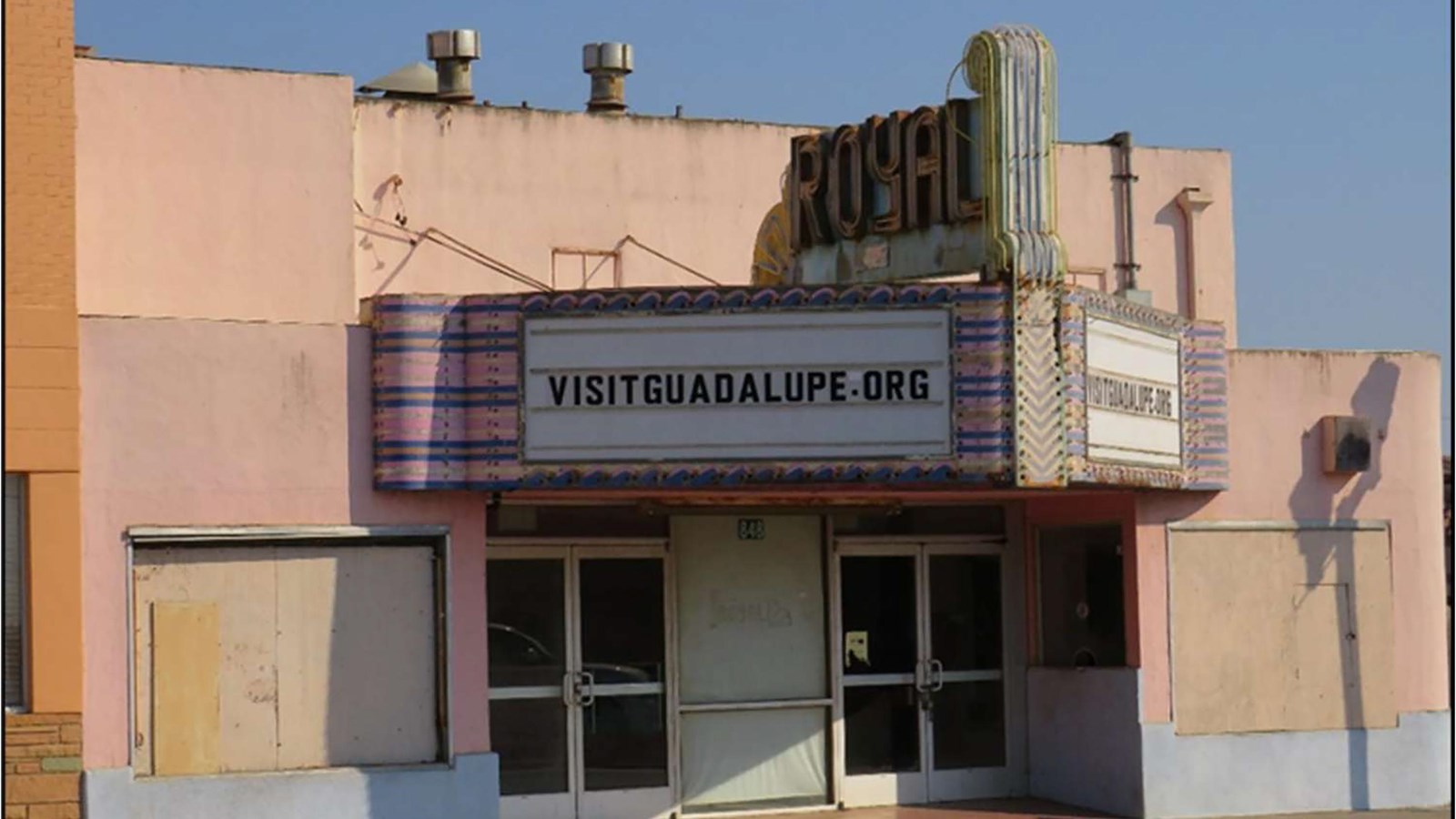
For most multiplex roofs in this market the standard is a heavier mechanically attached TPO over tapered polyiso. The tapered insulation corrects the drainage problems that build up on flat theater roofs over decades, and the white reflective surface meets the cool-roof energy requirements that apply to commercial reroofing here while cutting the cooling load under the Gulf sun. On large-span bays where deflection is a concern, an adhered or hybrid approach removes the concentrated point loads that mechanical fasteners put at the seams. The other half of the job is scheduling. Cinemas run afternoon through late night, every day, so we sequence tear-off and dry-in so every section is watertight before the evening shows, coordinate any HVAC shutdown around the screening calendar, and keep the work clear of the entrances and the marquee during opening hours. Marquee and entry-canopy tie-ins, a chronic leak source on older theaters, get re-flashed as part of the scope.
Movie Theater Roofing Questions
What membrane do you use on a multiplex?
Usually a heavier mechanically attached TPO over tapered polyiso. The tapered insulation fixes the drainage problems flat theater roofs develop over time, and the white reflective surface meets cool-roof energy requirements while reducing the cooling load. On large-span bays where deflection matters, we may use an adhered or hybrid system to keep point loads off the seams.
How do you handle the wide column-free auditorium decks?
We verify the deck type and gauge and size the fastening and insulation attachment to the real span of each bay rather than a generic pattern. Long spans deflect, and short-rib or older deck holds fasteners differently than modern deck, so the attachment has to match the actual structure.
Can the roof work happen without disturbing the acoustics or the screenings?
Yes. We keep the insulation assembly continuous so we do not create thin spots or sound paths, and we sequence the work so each section is watertight before the evening shows. Any HVAC shutdown is coordinated around your screening schedule, and we keep crews clear of the entrances during opening hours.
Why does a cinema have so much rooftop equipment?
Each auditorium needs its own HVAC, often a unit per screen, because occupancy swings fast and every room is controlled separately. Add concession kitchen exhaust and walk-in cooler condensers, and the penetration count gets high. We map and re-flash every penetration before new membrane goes down and add walkway pads where service crews travel.
Do you handle the marquee and entry canopy?
We do. Marquee supports and entry-canopy-to-building tie-ins are treated as individual flashing items. Those transitions are a common chronic leak source on older theaters, so we re-flash them as a standard part of the project.
What We Document
Membrane, seams, laps, edges, drains, scuppers, curbs, penetrations, rooftop units, and previous repairs.
Salt-air corrosion, wind exposure, ponding, blocked drainage, wet insulation clues, and interior leak evidence.
The practical split between immediate repair, maintenance, restoration review, recover planning, and replacement budgeting.