
Food Processing Facility Roofing roof access, staging space, and tenant or operations limits.
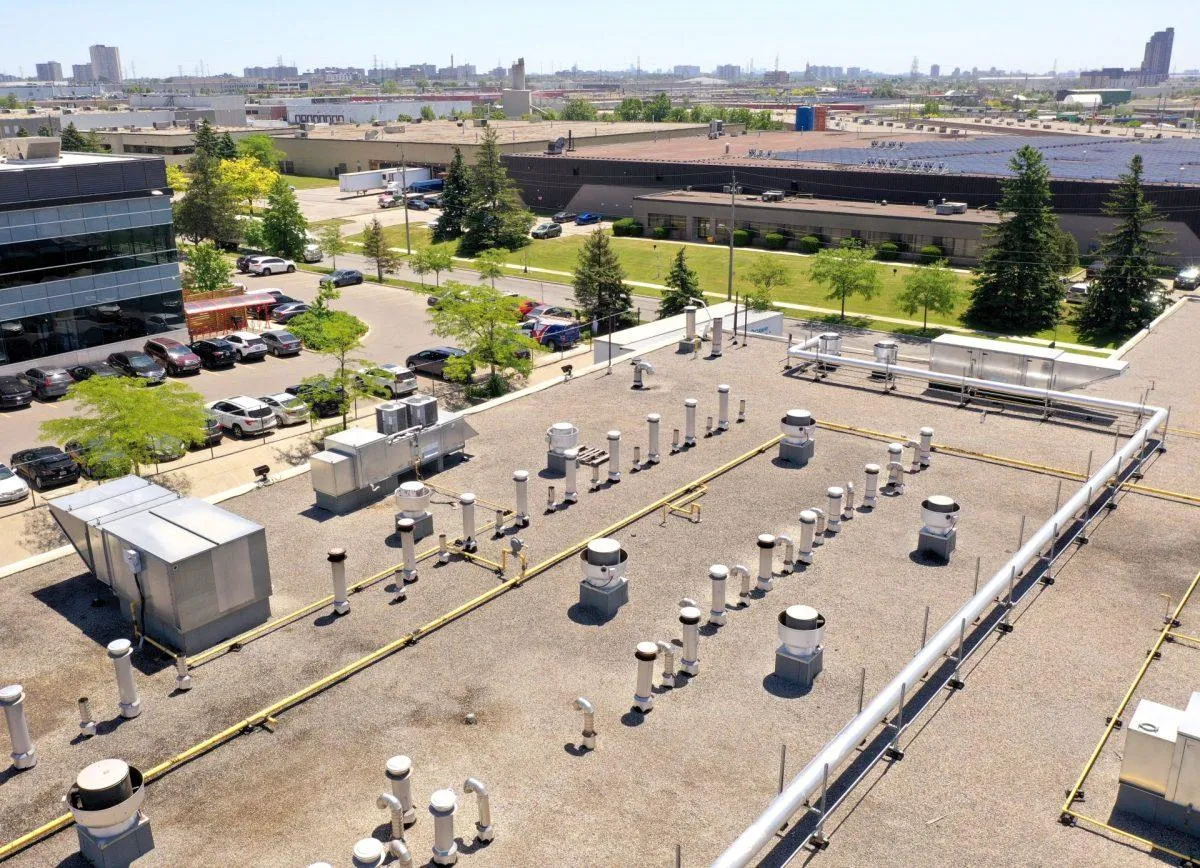
Food Processing Facility Roofing in Corpus Christi, TX
Washdown steam below, refrigeration units overhead, and a regulator who treats the ceiling as a food-safety surface. We roof Corpus Christi food plants for all three.
Two moisture problems, one roof
A food processing roof in Corpus Christi has to manage water coming at it from above and steam rising at it from below, and the second one is what quietly destroys these buildings. Daily sanitation washdowns flood the production floor with hot water and cleaning chemicals, and that warm vapor rises straight up into the deck. On the Gulf Coast, where the outside air is already humid most of the year, the deck almost never gets a chance to dry out between cycles. Without a properly designed vapor retarder and insulation assembly, that interior moisture condenses inside the roof and rots the deck and saturates the insulation from the underside, with no leak ever showing on the surface. We design the assembly to control that interior vapor drive first, because in a washdown plant that is the failure mode that actually shows up.
Refrigeration is a structural load, not just a tenant
The other thing sitting on a food plant roof is weight. Blast freezers, chill rooms, and process cooling carry banks of heavy condensing units and large ammonia or glycol equipment up on the deck, and the structure under those loads has to be confirmed before anyone adds insulation thickness or a new membrane layer. Just as important is what happens at the boundary between a warm roof and a cold room. The roof over a freezer has to maintain thermal continuity so the cold inside does not drive condensation into the assembly, and ponding water over a freezer adds a continuous heat load that makes the refrigeration system work harder and corrodes the deck over time. Tapered insulation over refrigerated areas in this climate has to be designed around the actual room temperatures and the direction the vapor wants to move, or it fails from the inside with no external symptom.
The food plants of the Coastal Bend
Materials and details a food-safety plan will accept
The membrane on a food plant is not a free choice. USDA- and FDA-regulated operations restrict what can go above a food-contact zone, and the restriction reaches past the membrane to the adhesives, primers, and sealants used in the flashing details. Many ordinary roofing adhesives carry solvents that have no business in a food production environment. We confirm material acceptability against the facility's food-safety plan before we spec anything over a production area, and we generally lean toward white single-ply systems that meet that standard while also handling the heat reflectance the Gulf sun demands. Drainage gets real attention too, because standing water on a food plant roof is both a structural problem and a sanitation flag. We design the tapered system and the drain and scupper layout to move water off cleanly, especially over the refrigerated bays where ponding does the most damage.
Working inside the sanitation window
A running food plant gives a roofer almost no daylight. These operations run two or three shifts, and the only reliable period when the line is down and the floor is being cleaned is the weekly sanitation window. Any work that opens the envelope above an active production area gets confined to that window, with the QA manager confirming the floor below is clean and protected before we start and after we finish. We phase the project around that production calendar instead of asking the plant to bend to ours, we keep each section dried in, and we keep a fast emergency response on call, because a leak over an active line in this kind of building is a food-safety event, not a slow drip to schedule around later. Our closeout records are built so a QA manager can produce roof condition and repair documentation during a USDA or FDA inspection.
Food Processing Facility Roofing Questions
Why does my plant roof rot even though it never visibly leaks?
Daily washdowns send hot water and steam up into the deck, and in our humid coastal climate the deck never fully dries. That interior moisture condenses inside the roof and saturates the insulation and corrodes the deck from underneath, so the damage runs for a long time before anything shows on the surface. Controlling that vapor with the right retarder and insulation is the core of a food-plant roof that lasts.
Can any roofing material go over a food production area?
No. USDA- and FDA-regulated areas restrict the membrane and also the adhesives, primers, and sealants, since many standard roofing products contain solvents that are not acceptable near food. We confirm every material against your food-safety plan before specifying anything over a production zone.
How do you deal with the weight and cold of our refrigerated areas?
We confirm the deck can carry the refrigeration equipment and any added insulation before we build up the assembly, and we design the roof over freezers and chill rooms to hold thermal continuity so the cold does not drive condensation into the deck. We also keep water from ponding over those bays, since standing water adds refrigeration load and corrodes the deck.
How do you schedule work without stopping the line?
We plan envelope work above active areas for your weekly sanitation window, with your QA team confirming the floor is clean and protected before and after. The whole project is phased around your production calendar, and each section is dried in before we leave.
What if a leak happens over an active line?
That is a food-safety event, not a routine repair, so we keep emergency response on call for fast temporary dry-in and provide documentation your QA team can use for incident reporting. Our closeout records are also built to support USDA and FDA inspections.
What We Document
Membrane, seams, laps, edges, drains, scuppers, curbs, penetrations, rooftop units, and previous repairs.
Salt-air corrosion, wind exposure, ponding, blocked drainage, wet insulation clues, and interior leak evidence.
The practical split between immediate repair, maintenance, restoration review, recover planning, and replacement budgeting.