
Car Wash Facility Roofing roof access, staging space, and tenant or operations limits.
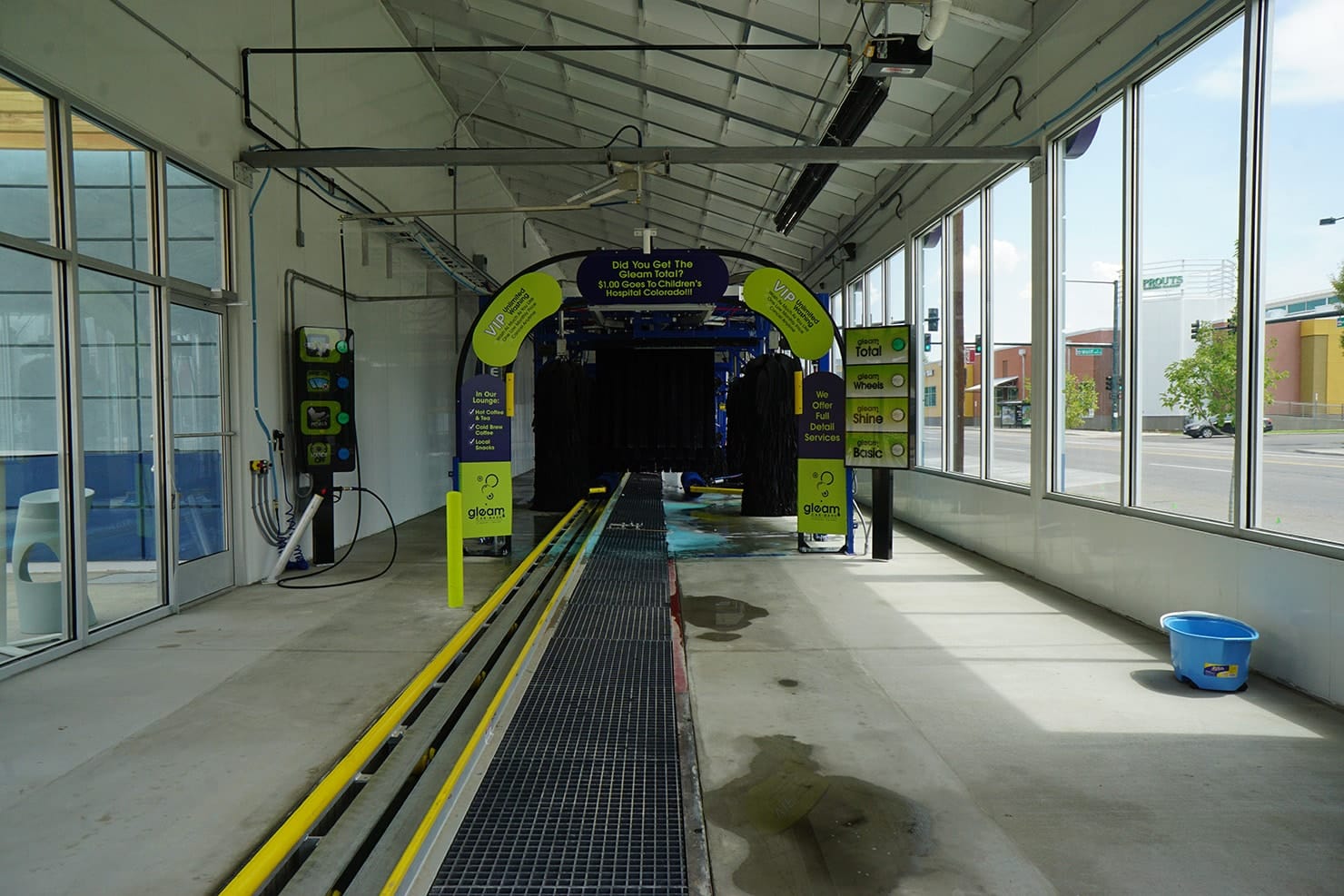
Car Wash Facility Roofing in Corpus Christi, TX
Express tunnels and full-service washes in Corpus Christi run a roof that fights moisture from two directions at once. We build car wash roofs for that reality.
A roof that gets attacked from the inside
Most commercial roofs only have to deal with weather coming down from the sky. A car wash roof has a second enemy living directly underneath it. Inside the tunnel, hot water, foaming detergent, tire-shine solvent, drying-agent wax, and rust-inhibitor blends turn into a warm, chemical-laden fog every time a car rolls through. That vapor rises, hits the cold underside of the metal deck, and condenses. Over a few seasons it works the fastener heads loose from below, rusts the deck flutes, and saturates insulation that no one can see from the roof surface. By the time a stain shows up on the ceiling of the equipment room, the corrosion has usually been running for a year or more. We approach a Corpus Christi car wash as a vapor-control problem first and a weatherproofing problem second, because that underside attack is what actually ends these roofs early.
Corpus Christi gives that vapor plenty of help. We sit on the edge of the Gulf with humidity that hangs in the air most of the year, so the deck rarely gets a dry stretch to recover. A wash on Saratoga Boulevard or out by the Crosstown is cycling cars from early morning through the evening rush, and the interior stays warm and wet the entire time. When the outside air is already heavy and the inside air is saturated, the dew point sits right at the deck line for hours. That is the exact condition that drives condensation into the assembly, and it is why a roof spec that works fine on a dry-climate wash will quietly fail here.
Where Corpus Christi car washes actually are
The wash business in this city clusters where the traffic is. The Saratoga Boulevard and Staples Street corridors on the Southside carry some of the heaviest daily car counts in the Coastal Bend, and the express-tunnel operators have followed that volume. South Padre Island Drive (SPID) feeds a steady run of in-bay automatics and gas-station washes between the interchanges. Out toward Calallen and the U.S. 77 corridor, newer subscription-model tunnels have gone up to catch the commuter flow heading north. And the older self-serve and full-service bays still sit closer to the bayfront and the Ayers Street side of town. Each of those zones has a different roof problem: the high-volume Southside tunnels live and die by chemical vapor control, the SPID in-bays usually have drainage and ponding issues over the equipment room, and the older bayfront bays carry decades of patched penetrations and salt exposure off the water. We walk the building and the chemical menu before we talk membrane.
Membrane and flashing built for the wash, not a warehouse
Membrane choice on a car wash is not a default. The alkaline detergents and wax compounds that keep a tunnel running are hard on some single-ply systems and easier on others, and most standard manufacturer warranties carry a flat exclusion for chemical exposure. For the tunnel and equipment-room sections, we lean toward a heavier PVC membrane whose chemistry holds up better against detergent and solvent contact, and we confirm with the manufacturer that the specific products in use at that wash are covered before anything goes down. We favor fully adhered or fleece-back attachment over the wash bay so there is no fastener field punching through the deck right where the vapor drive is worst. The customer lobby, office, and pay-station roof areas can run a more conventional system since they are not under the chemical plume.
Underside protection is where we spend real attention. A proper vapor retarder, the right insulation that will not wick and hold moisture, and sealed-tight deck penetrations are what keep the condensation cycle from eating the structure. We also treat the high-volume tunnel exhaust fans as their own problem. Those units move steam and chemical mist out of the building all day, and a standard HVAC curb detail does not hold up to that constant wet, warm airflow. We oversize and reinforce those curbs and flash each one as its own item.
Canopies, vacuum islands, and the spots that always leak first
On an express wash, the chronic leaks almost never start on the main roof. They start at the transitions. The vacuum-island canopies and the customer canopy over the pay lanes take vehicle exhaust, overspray, and constant thermal movement, and the point where a canopy ties back into the main building is the single most common failure spot we find on Corpus Christi washes. Canopy drains clog, the flashing at the building joint splits, and water tracks back into the wall. We bring those canopy roofs, gutters, downspouts, and tie-in details into the scope instead of pretending they are someone else's problem, because ignoring them is what turns a small roof job into an interior repair later.
Working around a wash that never really closes
A profitable tunnel in Corpus Christi runs seven days a week through most of the year, so we plan the work around the wash, not the other way around. Tunnel-section work gets sequenced into the early-morning or after-close windows so the bay can stay watertight and operational during peak hours. The lobby, office, and canopy work can usually happen during business hours with the crew staged and traffic kept clear of the lanes. Every section gets dried in before we leave for the day, and we keep the operator informed on what is open and what is closed so a surprise shower never catches an exposed bay.
Why does my car wash roof rust from underneath?
The tunnel produces warm, humid, chemical-laden air all day. When that air hits the cooler underside of the metal deck it condenses, and the moisture sits against the fasteners, deck, and insulation. In a humid coastal city like Corpus Christi the deck rarely dries out, so the corrosion runs continuously. Controlling that vapor with the right retarder and insulation is the core of a car wash roof that lasts.
What membrane do you put over the wash tunnel?
For the tunnel and equipment room we typically specify a heavier PVC membrane, fully adhered or fleece-back, because PVC stands up to the alkaline detergents and wax better than the alternatives and the adhered attachment keeps fasteners out of the worst vapor zone. We verify with the manufacturer that your specific chemical lineup is covered under warranty before we commit to a system.
Will my chemical program void the roof warranty?
It can. Most single-ply warranties exclude chemical exposure by default. Before we spec anything over the tunnel, we match your detergent, wax, and tire-shine products against the manufacturer's chemical-resistance data and confirm the warranty will hold. Some manufacturers offer chemical-exposure warranty options, and we find those for you.
Can you reroof while we stay open?
Yes. Tunnel-section work is sequenced into your early-morning or after-close window so the bay stays watertight during peak hours, and lobby, office, and canopy work happens during the day with traffic kept clear. Every section is dried in before the crew leaves each day.
Do you handle the vacuum and pay-lane canopies too?
We do. Vacuum-island canopies, the pay-lane canopy, their gutters and drains, and the canopy-to-building tie-ins are all part of our scope. Those transitions are the most common leak source on Corpus Christi express washes, so we re-flash and seal them as a standard part of the job.
What We Document
Membrane, seams, laps, edges, drains, scuppers, curbs, penetrations, rooftop units, and previous repairs.
Salt-air corrosion, wind exposure, ponding, blocked drainage, wet insulation clues, and interior leak evidence.
The practical split between immediate repair, maintenance, restoration review, recover planning, and replacement budgeting.
Daily dry-in expectations and closeout photos for ownership review.