
Warehouse and Distribution Center Roofing roof access, staging space, and tenant or operations limits.
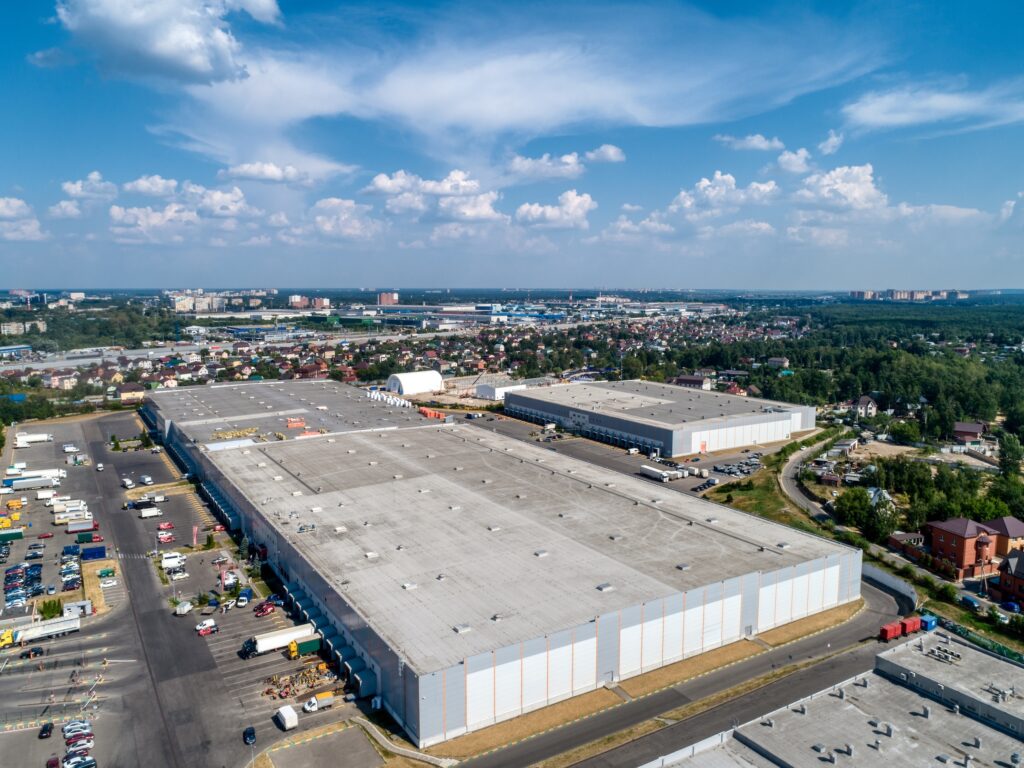
Warehouse and Distribution Center Roofing in Corpus Christi, TX
Commercial roofing for warehouses, distribution centers, and industrial storage facilities.
The Amazon Fulfillment Center on Leopard Street in Corpus Christi spans over a million square feet of active distribution space, and the roofing system protecting that investment must perform flawlessly against the Gulf Coast's punishing combination of salt air, tropical humidity, and seasonal hurricane exposure. Warehouse roofing at this scale is an engineering discipline entirely separate from standard commercial work, and property owners across the Coastal Bend are increasingly aware of what it costs when drainage fails on a half-million-square-foot low-slope roof during a storm event.
Drainage engineering is the first conversation any qualified commercial roofing contractor must have before specifying materials on a large warehouse footprint. A typical warehouse in Corpus Christi sits on a nearly flat deck with minimal pitch, meaning that every inch of standing water adds hundreds of pounds of load across the structure. Primary interior drains must be sized for rainfall intensities that Corpus Christi regularly exceeds during Gulf systems, and the design should include overflow scuppers positioned to catch what the primary system cannot handle before ponding becomes a structural risk. Contractors who skip this analysis in favor of simply re-covering the existing drain layout are leaving major liability on the table for the building owner.
Membrane selection for Gulf Coast warehouses centers on TPO and EPDM, each with meaningful trade-offs in this climate. TPO in 60- or 80-mil thickness has become the dominant choice for new Corpus Christi warehouse projects because its white reflective surface reduces cooling loads dramatically in a region where outdoor temperatures regularly push past 95 degrees from May through October. EPDM remains a strong option for re-roofing over existing single-ply because its black surface can sometimes be installed with a coverboard without full tear-off, but the heat absorption disadvantage in South Texas must be factored into the energy model before committing. Both membranes must be installed with enhanced seam specifications when the building is within the coastal wind zone classifications that apply along the Corpus Christi waterfront.
Dock door penetration flashing is a detail that separates experienced warehouse roofers from general commercial contractors. The transition from roof membrane to the vertical face above dock leveler bays creates a complex geometry where water commonly infiltrates if flashing is not counter-flashed into the wall assembly and properly terminated. Truck courts on the south and west exposures of Corpus Christi warehouses face direct solar radiation that accelerates sealant degradation at these transitions, requiring UV-stable sealants and regular inspection cycles as part of the facility maintenance plan.
Rooftop ventilation equipment on food-grade and climate-controlled warehouses presents penetration challenges that multiply with the size of the facility. Large distribution centers in the Corpus Christi area often have dozens of exhaust fans, make-up air units, and forklift battery charging ventilation points cut through the deck. Each penetration must be individually flashed, caulked, and curbed to prevent the lateral wind-driven rain that Gulf Coast storms deliver. Any roof replacement plan on an active DC should include a full penetration inventory before pricing to avoid mid-project change orders.
The Gulf Coast climate also demands attention to wind uplift design that exceeds the requirements found in inland Texas. Corpus Christi sits within a wind-borne debris region under the Texas Building Code, and the roofing system must be fastened to resist the design wind speeds associated with the coastal exposure category. Mechanically attached single-ply installed at enhanced fastener patterns in the field and heavily reinforced at perimeters and corners is the standard approach for large warehouses that cannot afford even a partial membrane loss during a named storm event.
Cost per square foot on large Corpus Christi warehouse roofs typically falls between $6 and $11 per square foot for a full single-ply replacement including insulation upgrade, depending on existing deck condition, penetration count, and wind zone requirements. Projects on facilities larger than 300,000 square feet often benefit from economies of scale in material procurement, but the complexity premium for active facilities with ongoing operations partially offsets those savings. Owners should budget separately for drain upgrades and any structural repairs identified during the tear-off phase, as these costs are essentially impossible to estimate without opening the roof.
Selecting a roofing contractor with verifiable Gulf Coast warehouse experience and manufacturer certifications for the specified membrane system is the most consequential decision in the procurement process. Manufacturer warranties on large warehouse projects are only as valuable as the certified installer program backing them, and a 20-year NDL warranty from a TPO manufacturer requires a credentialed applicator and documented installation records. Corpus Christi warehouse owners should request references from completed projects within the coastal wind zone and verify that the contractor carries the insurance limits appropriate for a project of this scale before signing a contract.
Send the roof location, leak photos, access notes, and decision timeline. We will start with the roof evidence and keep the scope tied to what can be verified.
What We Document
Membrane, seams, laps, edges, drains, scuppers, curbs, penetrations, rooftop units, and previous repairs.
Salt-air corrosion, wind exposure, ponding, blocked drainage, wet insulation clues, and interior leak evidence.
The practical split between immediate repair, maintenance, restoration review, recover planning, and replacement budgeting.