
Solar Roof Integration roof access, staging space, and tenant or operations limits.
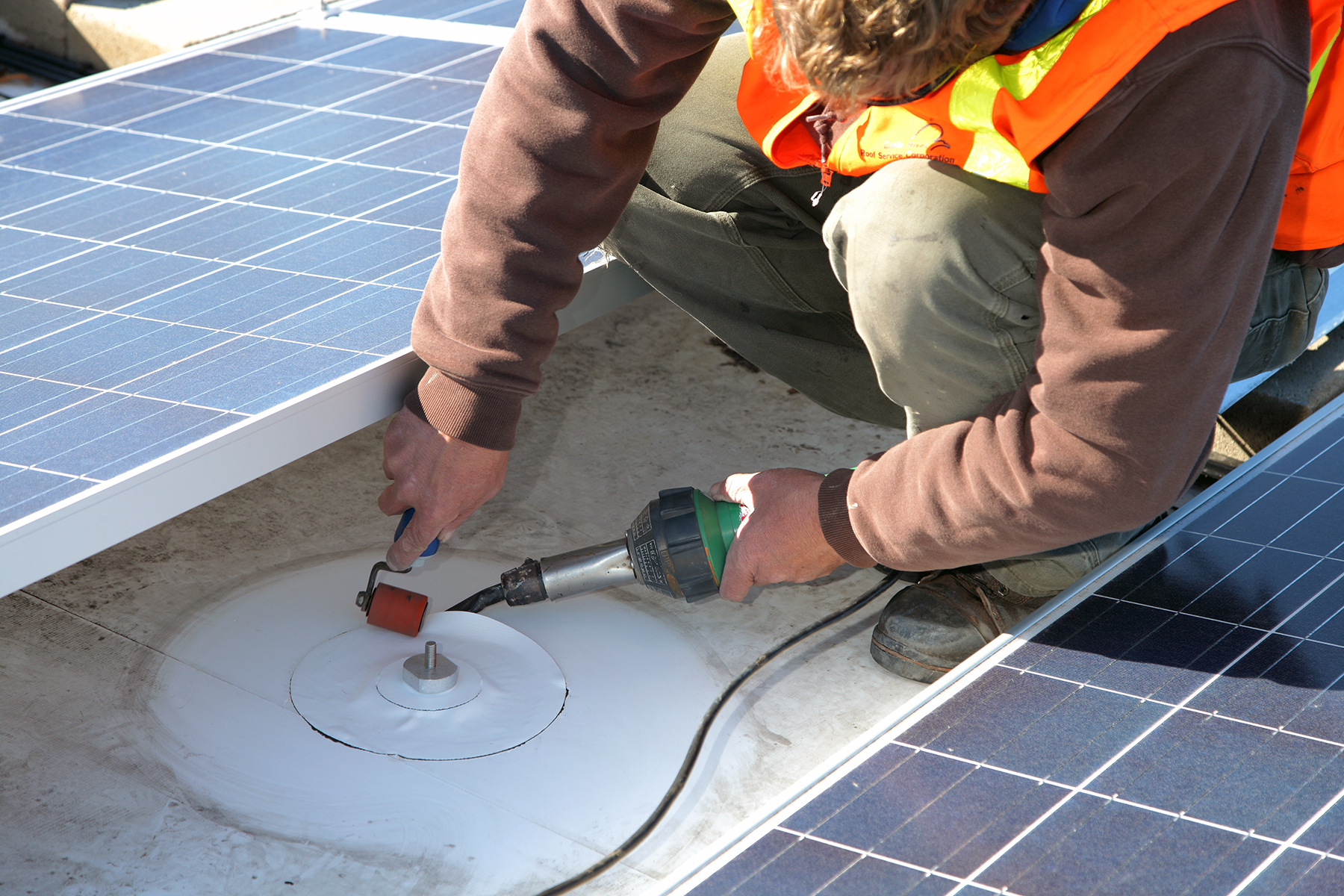
Solar Roof Integration in Corpus Christi, TX
Panels last three decades. The membrane under them might not. Our job is to make the roof and the array a single system that reaches the finish line together.
The Roof Is the Foundation of a Rooftop Array
Cheap power off your own roof is an easy thing to say yes to, and the warehouses out by the Corpus Christi Army Depot, the cold-storage and seafood-processing plants near the Inner Harbor, and the office buildings along Shoreline Boulevard are exactly the wide, flat candidates that make solar pencil out. The catch is almost never the panels. It is the membrane underneath them. A photovoltaic array is built to generate electricity for twenty-five to thirty years; if the roof beneath it has eight years of life left, somebody is paying to lift that array off, reroof, and set it back down long before the panels are done. Detach-and-reset work on a fully populated roof routinely runs into five and six figures. So the first call we make on any solar job is not about wattage. It is about whether the roof you have can carry the commitment you are about to bolt to it.
We are roofers, not a panel dealer. That distinction matters, because our recommendation on whether to reroof first is not colored by a commission on the array. We core the assembly, pull moisture readings, and give you a straight remaining-life number. If the roof is young and sound, we prep it and hand it to your solar contractor in good condition. If it is near the end, we show you why doing the roof now is the cheaper path over the life of the system, even though it feels like the more expensive one today.
Two Ways to Hold an Array Down, Two Different Roofing Jobs
How the racking attaches changes everything we do on the membrane. A ballasted system sits in trays weighted with concrete pavers and, done right, never punctures the sheet, which keeps the roof warranty clean but piles dead weight onto the structure. A mechanically attached system bolts stanchions straight through the membrane into the deck or the steel below, and every one of those feet, sometimes hundreds across a single array, is a roof penetration that has to be flashed as carefully as any rooftop curb. Where we attach, we build the connection on a manufacturer-approved base flashing or a heat-welded target patch, never a trowel of sealant that looks fine on day one and turns into a grid of leaks by the third Gulf summer. The same discipline applies to conduit runs, combiner-box stands, and junction boxes, each one getting a proper boot or a serviceable pitch pocket rather than something buried and forgotten.
The Bay Decides How Much Uplift the Array Must Resist
Corpus Christi sits in a coastal high-wind zone, and wind dictates the entire racking conversation here. A ballasted layout that holds firm in a calm inland county can lift, slide, or scatter in a Gulf blow if the ballast was sized off a generic national wind map instead of this site's actual design wind speed. We work the numbers with the array engineer so the ballast weight, the mandatory setbacks from the roof edges and corners, and any extra mechanical fastening in the high-pressure perimeter and corner zones all answer to the real uplift this building will see. Weight cuts the other way, though. Pavers add pounds per square foot, and an older steel deck on open-web bar joists may not have been engineered to carry a loaded ballasted array. Nobody commits to ballasted versus attached until the structural capacity is confirmed, because the cheaper racking is no bargain if the building cannot hold it up.
Picking a Membrane That Belongs Under Panels
Not every roof system is a good host for solar. For most solar-ready commercial roofs in the Coastal Bend we point owners toward a reflective white single-ply, usually a 60-mil TPO or PVC. The bright surface bounces heat that would otherwise bake the modules, and cooler panels generate more, so the roof choice actually nudges the array's output up. The membrane also has to be weldable, because welding racking bases, conduit supports, and walk pads to the sheet is what makes them watertight; glued accessories on a hot coastal roof do not hold. When ballast weight is the limiting factor, a fully adhered assembly spreads the load with no penetrations at all. When the array is fastened, we lay out the membrane's fastening pattern and the racking's fastening pattern so they share the deck without colliding, and we run walk pads along the service routes and around every string so the maintenance crews never grind their boots into bare membrane.
Two Warranties That Have to Be Made to Agree
The single most common way a rooftop solar project goes wrong is the warranty handoff. The membrane manufacturer warrants the roof. The solar EPC warrants the array. When those two crews never coordinate, the first leak becomes a finger-pointing match while water keeps coming in. The major single-ply manufacturers will only keep a roof warranty in force beneath an array if their conditions are satisfied: approved attachment details, approved walkway protection, and a pre-installation review by their own field representative. We run that review, photograph and document every as-built penetration, and secure the manufacturer's written sign-off before the system is ever energized. We also set the sequence deliberately, with the membrane installed and inspected first, every conduit penetration flashed by our crew rather than left to the electrician, and the array crew arriving to a roof that is already closed up, watertight, and on record.
How a Solar Roof Project Runs With Us
- Core cuts and a moisture survey to fix the roof's remaining service life before any solar money is spent
- Structural load review with the array engineer covering ballasted dead load or mechanically attached uplift
- Membrane and attachment design matched to the racking method and this site's coastal design wind speed
- Manufacturer pre-installation review and written confirmation the PV system keeps the roof warranty intact
- Every penetration, base flashing, pipe boot, and walk pad set and inspected before the array is installed
- An as-built documentation package handed to ownership and to the solar contractor for the service file
Solar Roof Integration Questions
It hinges on remaining membrane life. A roof with fifteen or more documented years left is a solid candidate for solar as it stands. A roof down to seven years or less is almost always cheaper to replace first, since lifting and resetting an array at the next reroof costs far more than laying the panels onto a fresh membrane today. We core and scan the roof and give you a life estimate before you commit.
Not always. Ballasted racking holds the array with weighted trays and pavers and avoids penetrations entirely, which suits flat Corpus Christi roofs whose structure can carry the added weight. Mechanically attached racking does penetrate, and where it does we flash every stanchion on an approved base flashing or a welded target patch that stays inside the membrane warranty.
Only if it was sized to the wrong wind speed. We coordinate the ballast calculation, the edge and corner setbacks, and any added perimeter fastening to this site's real coastal design wind speed rather than a generic map, so the array stays put when the wind comes off the bay.
Usually a reflective white TPO or PVC at 60-mil. The bright surface keeps the modules cooler so they produce a little more, and the weldable sheet lets us heat-weld racking feet, conduit supports, and walk pads instead of trusting adhesives that let go in coastal heat. A fully adhered system is the better answer where ballast weight strains the structure.
We run the membrane manufacturer's pre-installation review, flash every penetration ourselves before the array goes on, and obtain the manufacturer's written approval that the PV system does not void the roof warranty. Doing the roof first and documenting each as-built detail keeps both warranties enforceable.
What We Document
Membrane, seams, laps, edges, drains, scuppers, curbs, penetrations, rooftop units, and previous repairs.
Salt-air corrosion, wind exposure, ponding, blocked drainage, wet insulation clues, and interior leak evidence.
The practical split between immediate repair, maintenance, restoration review, recover planning, and replacement budgeting.