
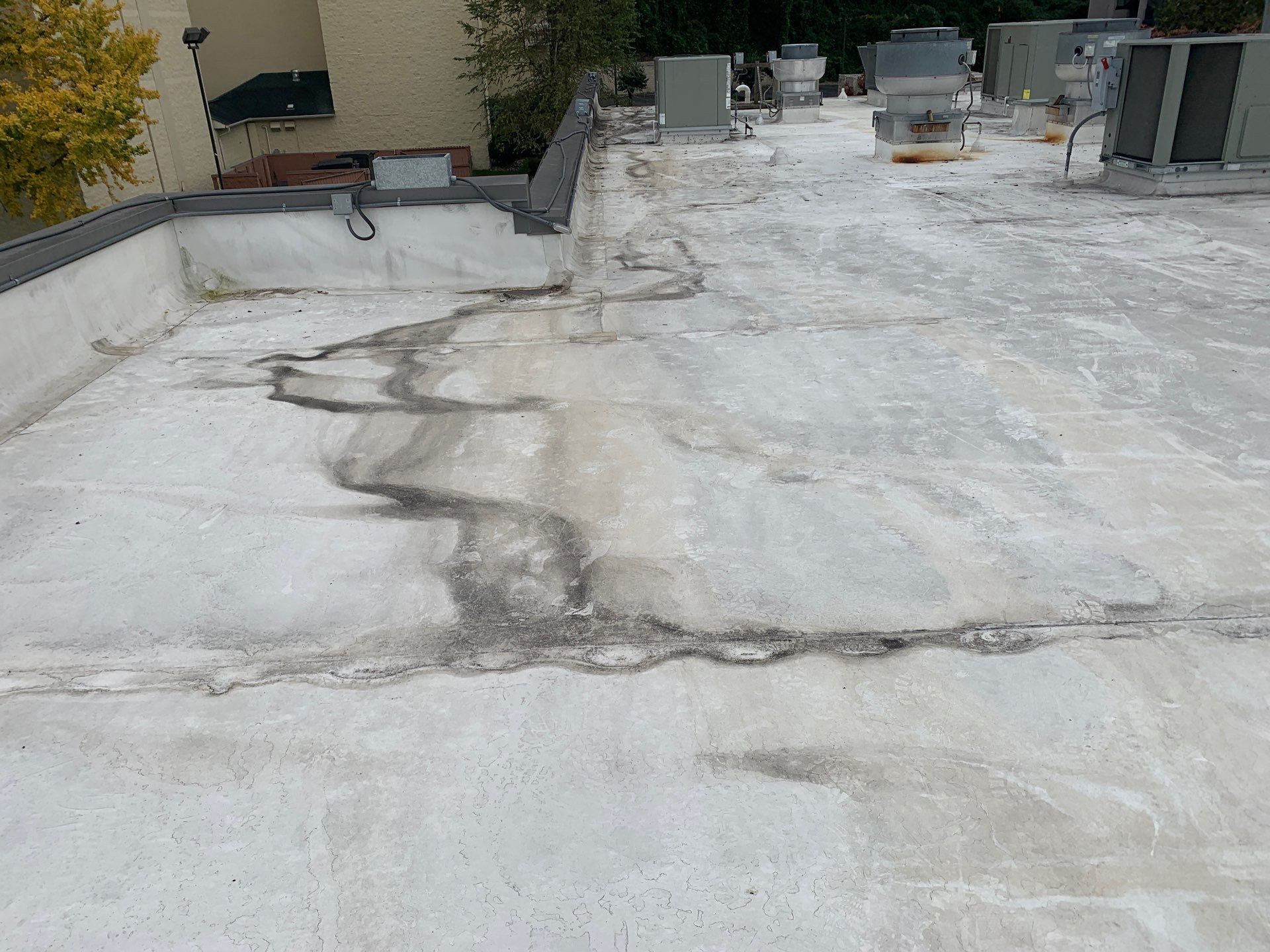
Hurricane Roof Damage Insurance Claim Documentation in Corpus Christi, TX
Corpus Christi sits on the open Gulf, and every hurricane season, June 1 through November 30, brings the chance of a landfall or a near-miss that still delivers damaging wind and rain. Coastal Bend building owners generally carry separate wind or named-storm coverage through the Texas Windstorm Insurance Association or a private windstorm policy, on top of their standard commercial property coverage, and the roof documentation for that kind of claim has to be built to match.
What a Hurricane Claim File Needs
A hurricane-related roof claim typically needs a pre-storm condition reference where one exists, post-storm photos tied to a specific date, and a description of the failure mode: wind uplift at the perimeter, membrane tears from wind-blown debris, or water intrusion through a compromised seam. We document each separately, because a carrier or TWIA adjuster will often ask whether damage is wind-driven or rain-driven, and the roof detail answers that question better than a general description.
Wind Uplift and Perimeter Damage
Roof edges, corners, and parapet walls take the highest wind pressure in a hurricane, and that is where we start on every inspection. Lifted or missing edge metal, pulled coping fasteners, torn membrane at the perimeter lap, and displaced gravel stop are common findings on Corpus Christi roofs after a tropical system moves through, whether the building sits near the port, along North Beach, or farther inland.
Windstorm Certification and the WPI-8
Nueces County is designated a windstorm catastrophe area under the Texas Windstorm Insurance Association, which means many commercial roofs here were installed or repaired under a WPI-8 certificate confirming the work met windstorm building code. When a hurricane claim touches a WPI-8-certified roof, we document whether the damage affects the certified assembly and note anything relevant to re-certification, since that detail matters for both the claim and the building's ongoing windstorm coverage. We are not the certifying inspector; we document conditions so the right licensed windstorm inspector has an accurate starting point.
Interior Water Damage From a Compromised Roof
Wind-driven rain finds gaps a dry-weather inspection would miss: a lifted seam, a cracked pitch pocket, a pulled-back membrane edge. We pair the exterior roof walk with interior observations, ceiling staining, insulation saturation, tenant reports, so the claim file connects the roof failure to the interior damage instead of leaving that link for the adjuster to guess at.
Emergency Dry-In Before the Full Scope
After a hurricane, protecting the building from further water intrusion comes before a full claim scope gets written. We can install emergency tarp or temporary dry-in on an active leak while the claim documentation and adjuster meeting are still being scheduled, so ongoing damage does not complicate the eventual settlement.
Does my commercial property policy cover hurricane roof damage?
In Corpus Christi, wind and named-storm damage is often covered under a separate TWIA or private windstorm policy rather than the base commercial property policy. Review your declarations page or ask your agent which policy applies, and we will document the roof to support either one.
What is a WPI-8 certificate and does my roof have one?
A WPI-8 is the Texas Department of Insurance windstorm certificate confirming a roof was installed to windstorm code, common on commercial buildings in Nueces County. We can check for visible certification tags and note roof conditions relevant to re-certification, though the certificate itself is issued by a licensed windstorm inspector.
How soon after a hurricane should the roof be inspected?
As soon as it is safe to access the roof. Early documentation captures conditions before rain, wind, or temporary repairs change what is visible, and it supports a faster, more accurate claim file.
Can you tarp the roof before the claim is settled?
Yes. Emergency dry-in protects the building and is typically expected by insurers as reasonable mitigation. We document the tarp work separately from the permanent repair scope.
Do you handle the claim negotiation with TWIA or my insurer?
No. We're your roofing contractor, not a public adjuster. We inspect, document, and provide a technical scope; you and your adjuster or public adjuster handle the claim negotiation itself.