
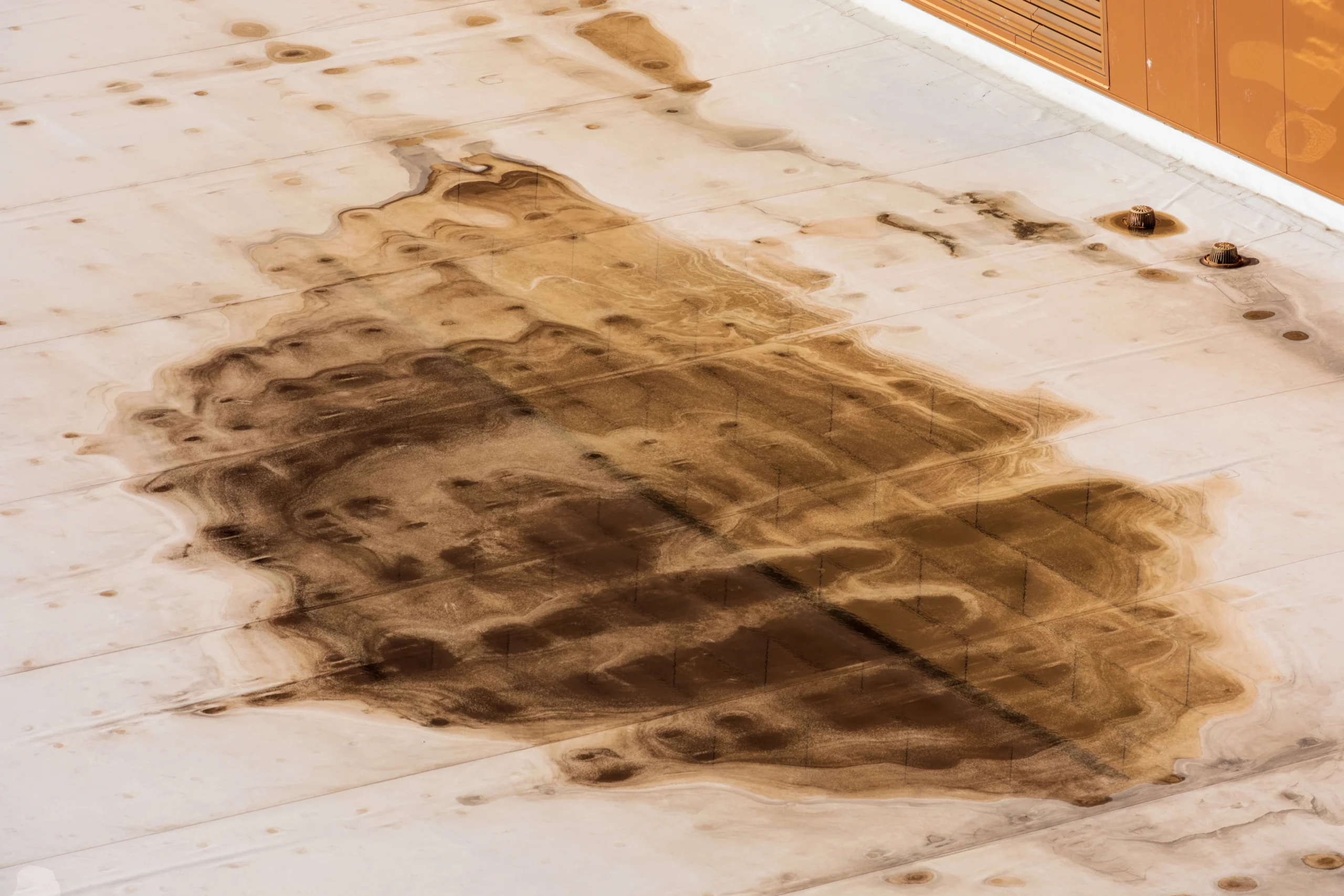
Hail Damage Roof Insurance Claim Documentation in Corpus Christi, TX
Hail is less consistent along the immediate Corpus Christi coastline than it is farther inland across Nueces County and the rest of South Texas, but spring and early-summer thunderstorms still bring hail-producing cells through the area, and commercial roofs from Calallen to the Southside can take a hit. Hail damage is also one of the harder claims to document well, because the marks it leaves are often subtle until a membrane has had time to fail.
What Hail Damage Looks Like on a Commercial Roof
On smooth single-ply membranes like TPO or PVC, hail typically shows as bruising, soft depressed spots that have not yet split, along with fractured or displaced pitch pockets and dented rooftop equipment housings. On built-up or modified bitumen roofs, look for cracked or dislodged granules, exposed felt, and fresh impact marks distinct from general wear. Metal roof panels and edge metal can show visible dimpling. We check all of these systematically rather than relying on a quick visual pass.
Why Hail Documentation Has to Be Thorough
Hail damage that is not addressed can turn into a leak months later, once UV exposure and thermal cycling work a bruise into a split. That delay is exactly why insurers scrutinize hail claims closely: the connection between the storm date and the damage has to be clear. We photograph impact density per roof section, measure representative test squares, and note membrane type and age so the documentation supports a storm-date cause rather than gradual deterioration.
Rooftop Equipment and Metal Components
HVAC condenser fins, exhaust caps, gutters, downspouts, and edge metal are often the clearest hail evidence on a roof, since dented metal does not get confused with normal aging the way membrane bruising can. We document damaged equipment and metal components as part of the same claim file, since repair or replacement of that equipment is frequently a separate line item from the roof membrane itself.
Test Squares and Impact Mapping
Where hail impact is not obvious from the ground or a quick walk, we mark out test squares across different roof sections and count and measure impacts within each one. That gives an adjuster a defensible sampling method instead of a single spot check, and it helps establish whether hail damage is spread across the whole roof or limited to one exposed section.
After the Documentation Is Complete
Once the file is built, we put together a repair or replacement scope based on what the test squares and equipment inspection actually showed. A few isolated impacts might support a targeted repair, while dense, roof-wide bruising usually supports a full membrane replacement. We hand that scope to you and your adjuster and stay available if a re-inspection is needed.
Does hail damage always require full roof replacement?
Not always. The scope depends on impact density, membrane type and age, and whether damaged areas can be reliably repaired without compromising watertight integrity. We base that recommendation on the test-square data, not a general assumption.
How do I know if hail damage is old or from a recent storm?
Fresh impacts typically show sharper edges and less UV fading than older damage. We compare impact condition against known storm dates when available to help support a claim tied to a specific event.
Is hail common in Corpus Christi?
Hail is more frequent inland across Nueces County and South Texas than directly along the coastline, but hail-producing storms do move through the Corpus Christi area, particularly in spring and early summer.
What is a test square and why does it matter for my claim?
A test square is a marked sample area, often ten feet by ten feet, where we count and measure hail impacts. Insurers commonly rely on this sampling method to assess roof-wide hail damage rather than requiring a full inch-by-inch inspection.
Can rooftop HVAC damage be included in the same claim?
Often yes, since dented condenser fins, exhaust caps, and other rooftop equipment are commonly hail-damaged alongside the roof membrane. We document equipment condition as part of the same inspection.